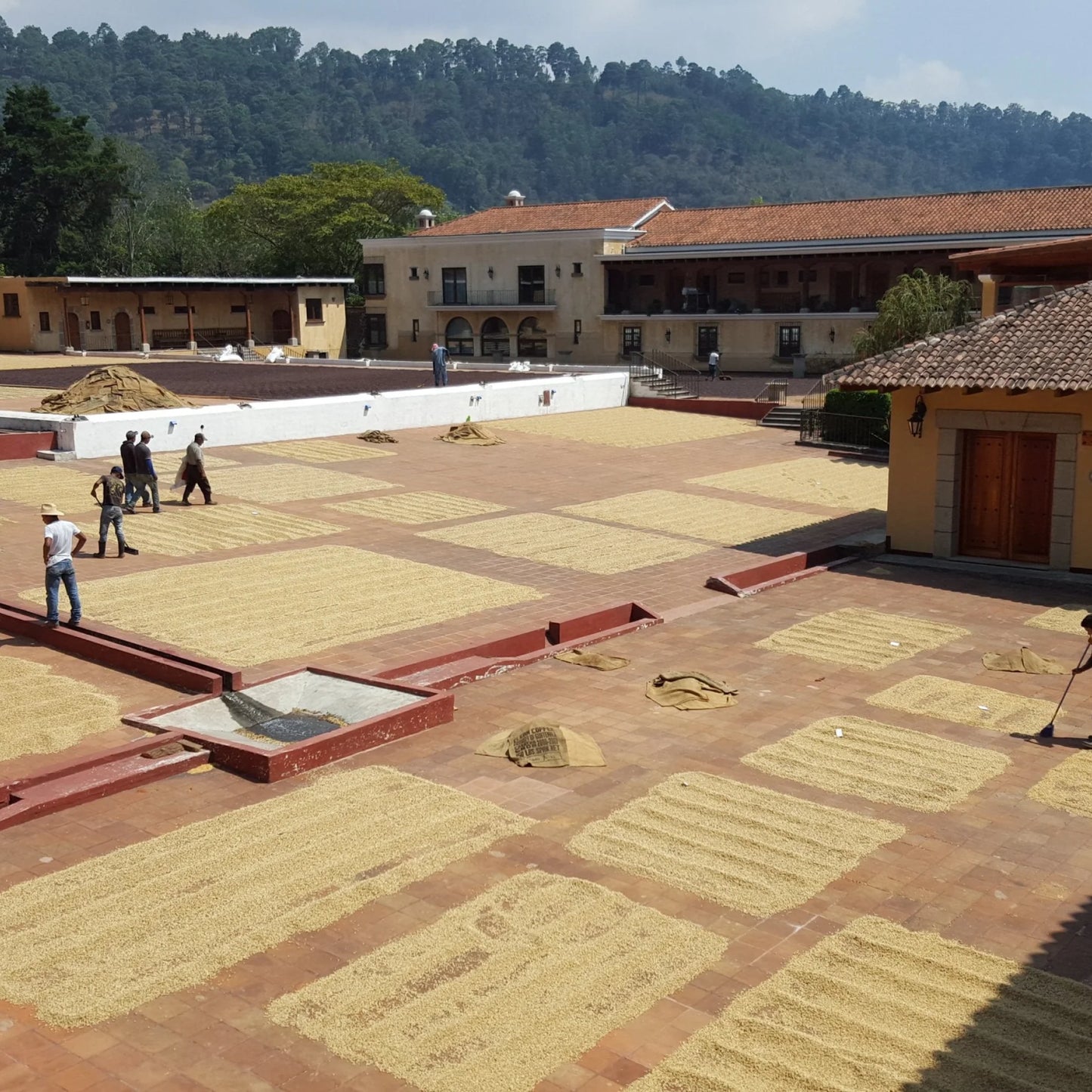
Antigua
The Antigua region holds a special place in the Rascal story — it is where our family's coffee journey began. Manuel Matheu Sinibaldi, our great great great grandfather, is considered the grandfather of Guatemalan coffee, pioneering its cultivation in the region in 1870.
But coffee's roots in Antigua go back even further. Jesuit priests first brought coffee plants to the city in the early 1800s, using them as decoration in the convents — little knowing that this bright red fruit would one day become Guatemala's most exported product.
Antigua's coffee grows across a valley cradled by three volcanoes — Agua (Water), Acatenango, and Fuego (Fire). Centuries of eruptions have deposited mineral-rich ash across the valley, creating the fertile volcanic soil that defines the region's coffee. The gravilea tree, Antigua's primary shade tree, protects the plants from frost.
In 1979, UNESCO declared Antigua a World Heritage Site — a living museum of Spanish Baroque architecture and a collision of Mayan, colonial, and modern culture. Many families here have multi-generational connections to specific farms, passing down knowledge and skills tied directly to coffee production. Rising demand for property, however, threatens this legacy. Keeping coffee in Antigua means ensuring farmers are genuinely rewarded for the quality they produce — something we are deeply committed to.